












































Grenades, grief and a deepening political divide: five takeaways from Sonia Gandhi’s new memoir
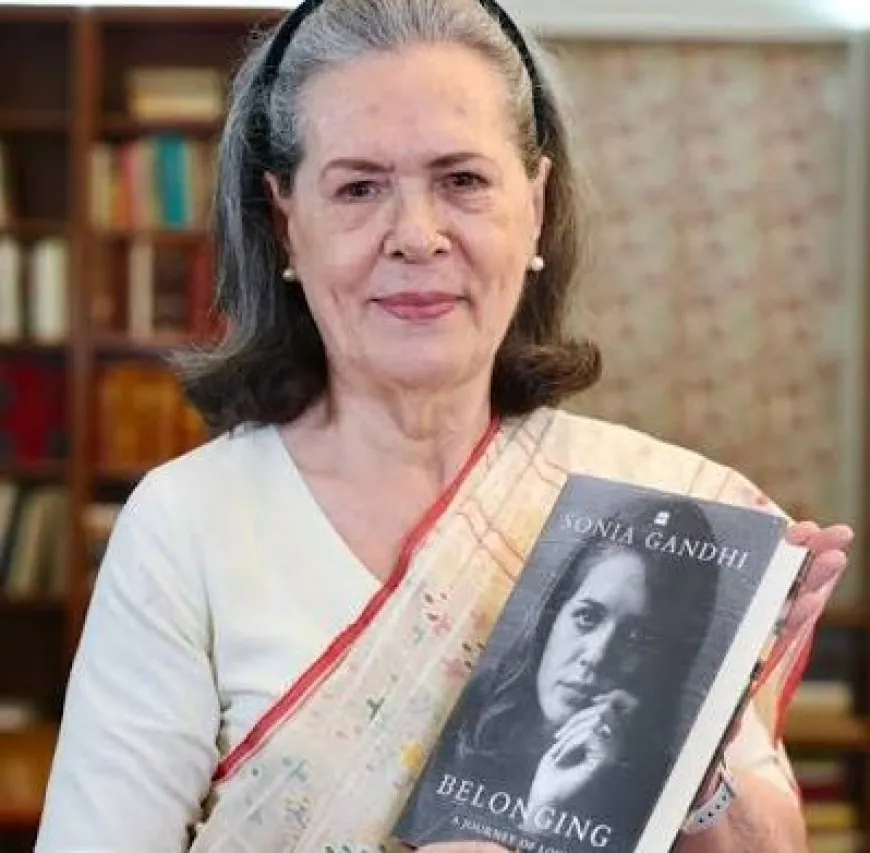
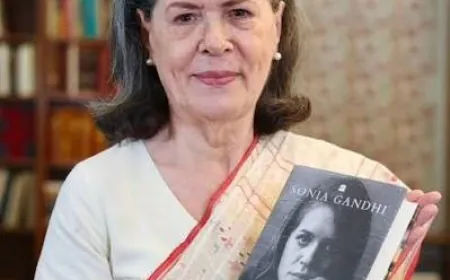
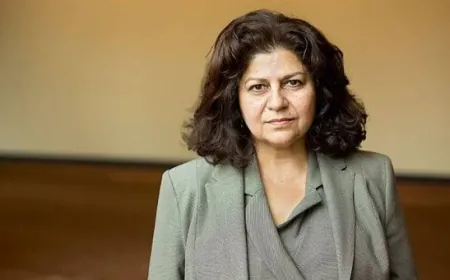
FEW love stories have been as closely entwined with a nation’s history as that of Sonia and Rajiv Gandhi. The former’s much-awaited political memoir, Belonging, offers a strikingly candid account of her journey from a small town in Italy to the highest echelons of power in India – all for love, she says.
The veteran Congress party leader has been fiercely protective of her personal world. In Belonging, she opens up for the first time about the extraordinary twists and turns of a life that has largely unfolded in full public view.
(The Guardian’s Hannah Ellis-Petersen has a rare in-person interview with Gandhi, and you can read an excerpt from the book here.)
Belonging, published today, contains moving glimpses of Gandhi’s private grief. She writes about the loss of her first child, who died shortly after birth, and the chilling discovery of grenades in a room of their house after Operation Blue Star, the 1984 military operation against Sikh separatists at the Golden Temple in Amritsar. She also provides a ringside view of several turbulent chapters in Indian politics, not least the violent assassinations of her mother-in-law, Indira Gandhi, in 1984 and her husband, Rajiv, in 1991.
Her book also revisits some of the darker episodes that have dogged the Gandhi family and the Congress party, including Indira’s imposition of the Emergency in June 1975, a 21-month period during which civil liberties were suspended, political opponents were jailed and the press was gagged, which caused fear and dismay across the country. In Gandhi’s account, it also caused a rift within the family.
Ultimately, Gandhi’s memoir is a vivid record of six decades of India’s political transformation from the Congress-dominated secular republic she moved to in 1968 until today, when Hindu nationalism has become the dominant political force under Narendra Modi.
Here are five key takeaways from her memoir and what they reveal about the state of Indian politics today.
Gandhi has had no real contact with Modi for the last 12 years
Gandhi’s account offers a glimpse of how deep the political polarisation runs in Indian politics today. In one revealing passage, Gandhi writes that she has had “practically no real contact” with Modi in the 12 years he has led the nation. In fact, at times when the two have been in the same rooms, such as the speaker’s small chamber, Modi “tends to look away, avoiding eye contact”, she says. On occasion, she adds, he has asked briefly about her health after a hospital stay.
For her, this breakdown is a departure from the past, when leaders on opposing sides of the aisle “would treat one another with cordiality”. After the 2001 terror attack on parliament, Gandhi immediately called then-BJP prime minister AB Vajpayee to enquire about his safety, a gesture he appreciated.
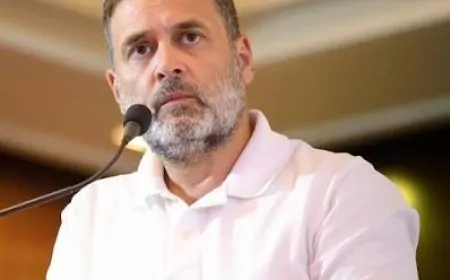
Gandhi sees an increasingly authoritarian style of politics, in which those in power seek to “belittle and torment” opponents. For years, Gandhi’s son, Rahul, has been the subject of BJP’s ridicule, which calls him Pappu, a derisive term intended to portray him as inexperienced and naive. She adds that similar things are happening elsewhere in the world, an observation that can be read in the context of US President Donald Trump’s use of personal insults and ridicule against opponents.
It’s lonely at the top for India’s female politicians
India has an illustrious history of women occupying top leadership positions, long before many other democracies. But their rise has often come at a cost – that of loneliness in navigating a male-dominated political world.
In the book, Gandhi describes a 2012 conversation with Hillary Clinton on the countrys’ female leaders and their backgrounds. In her recollections of Indira, she shares that, despite wielding authority, Indira could feel besieged and profoundly alone, and this was particularly acute, Gandhi writes, in the months leading up to the declaration of the Emergency by her mother-in-law.
Gandhi also writes of her own isolation, including when she decided to take on the leadership of the Congress out of a sense of duty to her family’s political legacy.
Those in power are increasingly stonewalling the press
Among the many ways in which Gandhi charts the erosion of India’s democratic conventions in Belonging, one particularly telling shift is the changed relationship between the media and those in power. She recalls a time when journalists had opportunities to question prime ministers directly.
In 12 years in power, Modi has not addressed a single press conference on his own. He has sat in on one press briefing at the conclusion of an election campaign, and appeared alongside US presidents at joint press encounters after bilateral meetings, where they took questions from the press. Modi has consistently avoided facing journalists in an open forum, and his media interactions have largely been one-on-one interviews with sympathetic, pro-government news anchors or in one much publicised exchange with a Bollywood actor who asked him how he liked to eat mangoes.
And it’s not just media …
The book’s publication has brought renewed attention to concerns about the space for free expression in contemporary India, and the extent to which apprehensions about repercussions may influence what can be said, written and published.
Penguin Random House India was to publish Gandhi’s memoir but withdrew from the project in August. Gandhi told the Guardian that it was “uneasy in general with the criticism of the government” and said it had dropped the book after she declined certain suggested edits. Penguin has disputed her account, saying that the suggestion it decided not to publish the book because of refused editorial changes “does not accurately reflect the circumstances”.
The book, released in the US by Alfred A Knopf, is being published in India by HarperCollins.
In June, Penguin had also pulled out of plans to distribute graphic journalist Joe Sacco’s The Once and Future Riot, about the 2013 Muzaffarnagar communal violence. The publisher cited an inaccurate map of India and unresolved citation issues. Sacco, however, blamed the decision on the “current political climate in India”.
She’s had quiet fallouts with the ‘thoroughly dishonest’
Western political memoirs, particularly by former heads of government or senior politicians, are often forthcoming in naming political adversaries, recounting private exchanges and offering candid assessments of colleagues. David Cameron’s 2019 memoir, For the Record, took aim at his former friend, Michael Gove, describing him as “mendacious” and a “foam-flecked Faragist”.
Gandhi, in contrast, is restrained. She writes warmly of the closeness between the Gandhi family and that of Bollywood superstar Amitabh Bachchan, whose parents she lived with when she first moved to India, but she makes no mention of the subsequent estrangement between the two families. In another instance, she does not name the political leader she describes as “thoroughly dishonest” and who she says she trusted in 1999, when Congress unsuccessfully attempted to form a coalition government.