













































































Brics business council pushes supply-chain resilience, AI cooperation
The Council called for stronger trade, investment and technology links across member economies, with focus on resilience, digital infrastructure and advanced manufacturing.

THE Brics Business Council has called for a supply-chain resilience framework and deeper cooperation in artificial intelligence (AI), digital infrastructure and advanced manufacturing, as the grouping seeks to turn its combined economic capabilities into greater trade, investment and technology links.
The recommendations, presented during India’s Brics chairmanship, span four pillars—resilience, innovation, cooperation and sustainability—and seek to move the grouping from broad areas of alignment towards practical business opportunities.
Speaking at the Brics session on Resilience, Innovation, Cooperation and Sustainability on Sunday, Jai Shroff, chair, Brics Business Council and chairman and group chief executive, UPL Ltd, said the recommendations were intended as a guide for the four pillars of India’s chairmanship.
“The council proposes a supply chain resilience framework for Brics to strengthen information sharing and preparedness during the disruption,” Shroff said, while also pointing to the scope for pilot value chains in select sectors based on the complementary strengths of member economies
Shroff said Brics brought together significant economic capabilities across food, fuel, fertilizer, manufacturing, technology, capital, natural resources and talent. The opportunity, he said, was to connect these capabilities more effectively through greater intra-Brics trade and investment, stronger value chains, technology sharing and new business partnerships.
The resilience pillar also covers dependable supply chains, food and energy security, modern infrastructure and diversified production networks, particularly in the context of disruptions in recent years.
Innovation is the council’s second focus. Technology, Shroff said, was transforming every part of the economy, from farms and factories to finance, logistics and energy. The ambition should not be limited to adopting new technologies but should also involve innovating together.
The report calls for deeper cooperation in artificial intelligence, digital infrastructure and advanced manufacturing, besides connecting business technology providers and innovation ecosystems across Brics, he said.
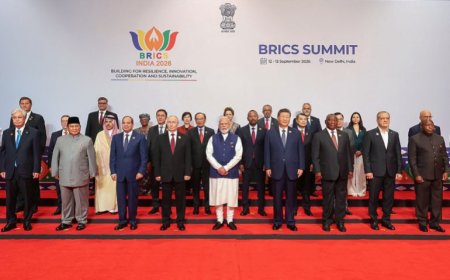
India is hosting the Brics Business Forum and the leaders' summit from 11–13 September.
From ideas to deals
The cooperation pillar focuses on making it easier for companies to trade, invest and operate across markets. The report therefore emphasises paperless trade, electronic documentation and greater interoperability among digital systems.
The fourth pillar, sustainability, focuses on cooperation in green hydrogen, biofuels, sustainable aviation fuel and low-carbon fuels.
“Such cooperation must be supported by progress in technology standards, infrastructure and financing. It can create new industries, value chains, investments and employment across our economies,” Shroff said.
He said Brics already had enormous economic capacity, but the task was to translate that capacity into opportunities.
“For the business council's success is ultimately measured not by the number of recommendations we make but by the outcome of them. Projects launched, partnerships formed, technologies developed and trade and investment generated.”
He added that governments create an enabling environment, while businesses must convert it into opportunity and economic value.
“Resilience gives our economy strength. Innovation gives us competitiveness. Cooperation gives them scale. Sustainability gives them longevity. The opportunity before us is to bring all four together,” Shroff said.
The Brics Business Council, he said, was ready to work with governments and institutions to take forward the recommendations.
Shroff submitted the 2026 annual reports of the Brics Business Council to the Brics leaders for their consideration.
“We can identify areas where there is a clear business case for cooperation and make it easier for our companies to work together. India's chairmanship has been guided by the 'Building for Resilience, Innovation, Cooperation and Sustainability'. These are broad ideas for business. They are actually quite practical,” he noted.
At a separate press briefing on the 18th Brics summit, external affairs secretary (Economic Relations) Sudhakar Dalela said the summit’s proceedings were structured around distinct objectives, with the first day focused on discussions among member countries and adoption of the New Delhi Declaration, and the second taking the consensus to the wider BRICS family and the Global South.
The second day’s open session, he said, was themed “innovation, cooperation and sustainability, shaping the future for inclusive global growth”, reflecting India’s broader chairmanship theme of building for resilience, innovation, cooperation and sustainability.