




















































































Malaysia plays key role in Asian cybersex crime crackdown, over 300 arrested
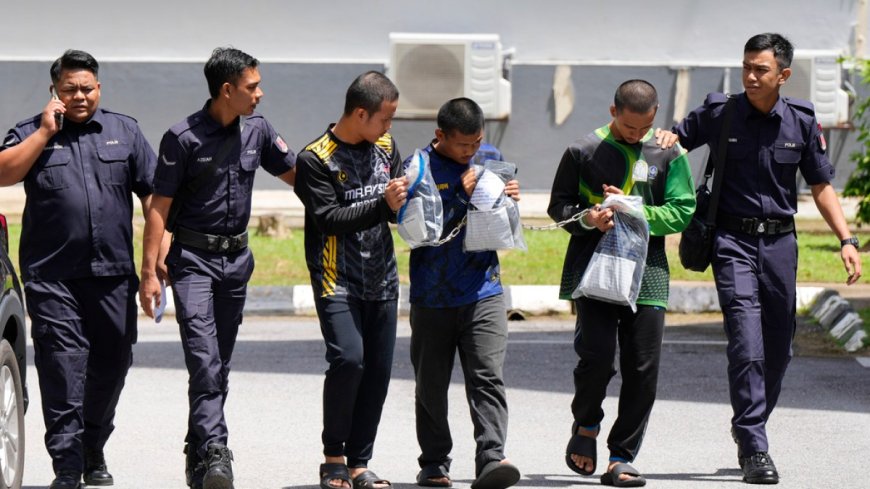
MALAYSIA was among seven countries involved in an international crackdown on online child sexual exploitation that saw the arrests of more than 300 suspects.

Inspector-General of Police Datuk Seri Mohd Khalid Ismail is expected to disclose tomorrow the number of Malaysians who were arrested in the month-long cross-border operation led by Singapore police.
Eleven men were arrested in Singapore. They are believed to be linked to another 326 suspects arrested in raids in 382 locations across Singapore, Malaysia, Brunei, Hong Kong, Japan, South Korea and Thailand between March 23 and April 17.
The suspects, who include 15 women aged between 12 and 72, are believed to be involved in, among others, possession and distribution of child sexual abuse material, sexual communication with minors, commercial sexual exploitation and online extortion involving intimate images.
Singapore police have seized digital evidence, including 116 computers, 340 mobile phones, 25 tablets, 140 storage devices and 16 routers.
At the same time, 119 people are assisting in investigations.
Singapore police yesterday confirmed that 11 men were arrested but did not provide a country-by-country breakdown.
The New Straits Times learnt that Bukit Aman played a key intelligence-sharing role in the takedown.
Federal police were instrumental in developing several leads, including one case that involved cross-border payments for illicit material via encrypted platforms.
In one case, Singapore police acted on intelligence from their Malaysian counterparts against a suspect allegedly selling obscene materials to buyers in the republic through a Telegram channel.
Two men in Singapore, aged 26 and 28, were investigated for making cross-border payments to access the content.
In another case, the police, based on information from a non-governmental organisation, arrested a suspect linked to the sexual exploitation of two victims via an online platform.
The operation against online child sexual exploitation exposed the growing complexity of digital sex crimes.
NST learnt digital sex crimes were increasingly driven by encrypted messaging platforms, peer-to-peer networks and cross-border financial channels, which allowed offenders to evade detection.
Singapore police said close collaboration with regional law enforcement agencies, technology firms, financial institutions and civil society groups was critical in dismantling these networks, warning that such crimes would continue to evolve alongside digital ecosystems.
A source close to the investigations said many of the victims were believed to be minors.
Efforts are underway to establish their identities and nationalities.
"We're not just looking at who downloaded or paid for the content, but we're tracing the network back to its core," said the source.
"Questioning the 119 people assisting in the probe is critical to identifying those higher up the chain.
"These arrests matter, but dismantling the syndicate's masterminds is what will truly cripple its operations," the source added.