




















































US midterm election results impact on H-1B visa: What Republican or Democratic control could mean for Indians
US midterm results could shape H-1B visa policy. A Democratic win may increase scrutiny of Donald Trump’s immigration measures, while Republicans could seek legislative backing for the $100,000 fee. A change in Congress would not automatically alter visa rules.

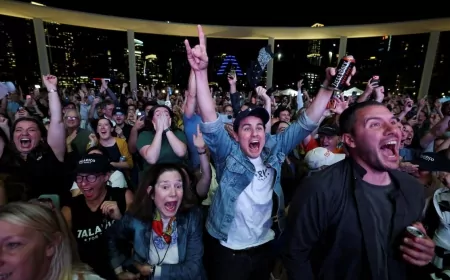
US President Donald Trump and his Republican Party faced a crucial test on Tuesday (local time) as midterm election results began coming in, with control of Congress at stake.
The outcome will be closely watched not just in the US but also in India, as it could shape future H-1B visa policy. India-born beneficiaries accounted for 69.9% of all approved H-1B petitions in the 2025 fiscal year, according to US Citizenship and Immigration Services (USCIS) data.
The elections, held on 3 November, could shape the final two years of Trump's presidency.
Congress is currently controlled by Republicans, with an effective 219–214 advantage in the House of Representatives and a 53–47 majority in the Senate, including independents aligned with each party. However, if Democrats win control of Congress, their victory could make it tougher for Trump to advance his agenda.
How could US midterm results affect H-1B visas?
NDTV Profit recently reported that a Democratic victory could increase congressional scrutiny of immigration rules and put some Republican-backed proposals on hold, although major policy changes are unlikely.
Even if Democrats win control of Congress, the outcome would not automatically overturn Trump's presidential proclamations. The US president would also retain the power to veto legislation, making it difficult for Democrats to enact major changes.
The shifting dynamics would be particularly significant for H-1B visa holders, since Trump announced some drastic immigration measures after returning to the White House for a second term. These include a $100,000 fee for new H-1B visa applications, announced last September.
The fee has faced legal challenges. According to Reuters, US District Judge Haywood Gilliam blocked its implementation after finding that USCIS and the State Department had failed to follow the required rulemaking procedures. In a separate case, a federal judge in Boston earlier ruled that the fee constituted an unlawful tax that Congress had never authorized.
If Republicans retain control of Congress, they could seek to pass legislation, giving the fee a statutory basis, while a Democratic majority in either chamber could block such efforts. Several Democratic-led states have challenged the fee in court, arguing that it could harm local economies, universities, hospitals and technology businesses.
What is H-1B visa programme?
The H-1B programme allows U.S. employers to hire foreign workers with training in speciality fields. It has an annual cap of 65,000 visas, with another 20,000 places reserved for workers holding advanced degrees from US institutions. H-1B status is generally granted for an initial period of up to three years and can be extended to six years.
Before Trump introduced the $100,000 fee last year, employers typically paid between $2,000 and $5,000, depending on various factors. Defending the move, Trump said the programme "has been deliberately exploited to replace, rather than supplement, American workers with lower-paid, lower-skilled labour."
Critics of the H-1B visa have also said the programme has been abused by several companies that replace American workers with cheaper foreign labour.