



















































‘Political activities like dharna, satyagraha have no place in democracy’: High Court
“Political activities like dharna, hunger strikes, and other practices like satyagraha have no place in a constitutional democracy, much less in academic institutions,” the Kerala High Court said on Tuesday, November 3, citing a 2017 judgement by another bench. A division bench comprising Justices Anil K Narendran and Muralee Krishna S made the observation in an order denying permission to suspended students of the Sree Sankaracharya University of Sanskrit in Kalady to appear for exams. In its November 3 order, the bench quoted the 2017 judgement in Dr Antony Thomas v VM Muhammed Rafique and others to say that students engaging in political activities are liable to be expelled or rusticated. The 2017 judgement had said, “Political activities like Dharna, hunger strikes and other practices like Sathyagrah have no place in a constitutional democracy, much less in academic institutions. Anyone indulging in the said activities in an educational institution would make himself liable to be expelled and/or rusticated. Educational Institutions are meant for imparting education and not politics. By their political ambition the political parties cannot hold to ransom the educational institution or the right of the civilized students to receive education.” The 2017 judgement had also quoted Dr BR Ambedkar to say, “If we wish to maintain democracy not merely in form, but also in fact, what must we do? … It means we must abandon the bloody methods of revolution. It means that we must abandon the method of civil disobedience, non-cooperation and satyagraha. When there was no way left for constitutional methods of achieving economic and social objectives, there was a great deal of justification for unconstitutional methods. But where constitutional methods are open, there can be no justification for these unconstitutional methods." Prior to this, on October 30, a single bench of the Kerala High Court had asked the University to allow the suspended students to appear for the exams. Setting aside the single bench’s interim order allowing 16 suspended students to write their semester examinations, the division bench held that the students had not established their eligibility under the university regulations, including the minimum attendance requirement. The students had argued that any shortage in attendance was a consequence of their suspension by the university, which prevented them from attending classes. Countering this, the division bench cited another legal precedent from 2023. “In Principal, IES College of Engineering v. Anas P.M. and others, a Division Bench of this court observed that, where there is a suspension ordered by reason of which there occurs an attendance shortage; essentially it is a just consequence of the order of suspension, which the students will have to necessarily suffer.” The students were suspended after a dispute arose from a protest held on the university campus on August 13, during a Syndicate meeting. The University accused the students of staging a mock funeral of Vice-Chancellor Ciza Thomas, manhandling her, and attempting to damage her vehicle as she left the campus. The students, however, maintained that the demonstration depicting a fake funeral was part of a street play organised to highlight the longstanding neglect of the university's Theatre Department. They denied the other allegations levelled against them. Two FIRs were registered at the Kalady police station in connection with the incident. The university subsequently suspended the students on September 1, pending disciplinary proceedings. Following the November 3 division bench order, the 16 students moved the Supreme Court challenging it. According to LiveLaw, the students sought an interim direction restoring the order passed by a single judge on October 30. They also sought permission to appear provisionally for the remaining examination papers, with a direction to conduct special examinations for papers they may have missed before the Supreme Court's order.

“POLITICAL activities like dharna, hunger strikes and other practices like satyagraha have no place in a constitutional democracy, much less in academic institutions,” the Kerala High Court said on Tuesday, November 3, citing a 2017 judgement by another bench.
A division bench comprising Justices Anil K Narendran and Muralee Krishna S made the observation in an order denying permission to suspended students of the Sree Sankaracharya University of Sanskrit in Kalady to appear for exams.
In its November 3 order, the bench quoted the 2017 judgement in Dr Antony Thomas v VM Muhammed Rafique and others to say that students engaging in political activities are liable to be expelled or rusticated.
The 2017 judgement had said, “Political activities like dharna, hunger strikes and other practices like Sathyagrah have no place in a constitutional democracy, much less in academic institutions. Anyone indulging in the said activities in an educational institution would make himself liable to be expelled and/or rusticated. Educational institutions are meant for imparting education and not politics. By their political ambition, the political parties cannot hold to ransom the educational institution or the right of the civilized students to receive education.”
The 2017 judgement also quoted Dr BR Ambedkar, “If we wish to maintain democracy not merely in form, but also in fact, what must we do? … It means we must abandon the bloody methods of revolution. It means that we must abandon the method of civil disobedience, non-cooperation and satyagraha. When there was no way left for constitutional methods of achieving economic and social objectives, there was a great deal of justification for unconstitutional methods. But where constitutional methods are open, there can be no justification for these unconstitutional methods."
Prior to this, on October 30, a single bench of the Kerala High Court asked the university to allow the suspended students to appear for the exams. Setting aside the single bench’s interim order allowing 16 suspended students to write their semester examinations, the division bench held that the students had not established their eligibility under the university regulations, including the minimum attendance requirement.
The students had argued that any shortage in attendance was a consequence of their suspension by the university, which prevented them from attending classes. Countering this, the Division Bench cited another legal precedent from 2023. “In Principal, IES College of Engineering v. Anas P.M. and others, a Division Bench of this court observed that, where there is a suspension ordered by reason of which there occurs an attendance shortage; essentially it is a just consequence of the order of suspension, which the students will have to necessarily suffer.”
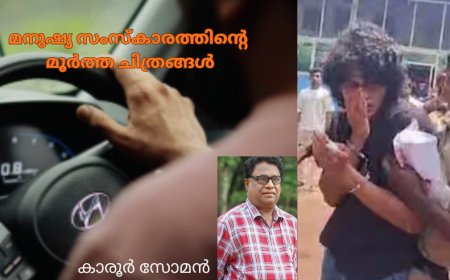
The students were suspended after a dispute arose from a protest held on the university campus on August 13, during a Syndicate meeting. The university accused the students of staging a mock funeral of Vice-Chancellor Ciza Thomas, manhandling her, and attempting to damage her vehicle as she left the campus.
The students, however, maintained that the demonstration depicting a fake funeral was part of a street play organised to highlight the longstanding neglect of the university's Theatre Department. They denied the other allegations levelled against them.
Two FIRs were registered at the Kalady police station in connection with the incident. The university subsequently suspended the students on September 1, pending disciplinary proceedings.
Following the November 3 division bench order, the 16 students moved the Supreme Court challenging it.
According to LiveLaw, the students sought an interim direction restoring the order passed by a single judge on October 30.
They also sought permission to appear provisionally for the remaining examination papers, with a direction to conduct special examinations for papers they may have missed before the Supreme Court's order.