



















































Ground Report: Kerala child killed by snakebite, family had no safe place to sleep
On the lower half of a crumbling outer wall, a pencil-drawn king wearing a crown watches over. The artist was eight years old. His name was Dikshal, and he will never draw again. The makeshift structure surrounded by trees he called home – asbestos sheets with tarpaulin for a roof, bamboo mats for bed, sand for floor – sits quietly on a lane bordering the Azhoor Bhagavathy Temple in Chirayinkeezhu, a coastal town on the outskirts of Thiruvananthapuram. Seven plastic chairs are arranged outside, as if waiting for someone. No one sits in them. Death of the little boy by snake bite on April 23 has brought in the neighbours, residents of the area and media attention to the house. The photograph of a heartily smiling Dikshal is on a flex outside the lane. His is the latest in a series of deaths by snake-bites in Kerala, believed to have risen after the unbearable summer heat. On April 18, an eight-year-old, Aljo, died after being bitten by a banded krait while asleep. His brother was also bitten. The cobra that bit Dikshal was found later in the house, hiding beneath a sewing machine. “We had heard of the recent bout of snake bites but thought that with the sheets covering our house, it would be hotter inside and keep the snakes away. We’d never seen a poisonous snake around here before, only the harmless rat snake,” Dileep, Dikshal’s father tells us. Dileep tears away from a small crowd of people huddled around him, to attend to his four-year old daughter, Dikshitha, complaining about a missing paratha. The little girl is running around the small yard with a friend, not yet grasping the absence of her brother. Half a dozen yellow wreaths are placed over a part of the yard where Dikshal is buried. His mother Anu is somewhere inside, resting. A little white dog is in a cage. The room where Dikshal slept on the night he was bitten by a snake, with visible gaps in the walls and roof. Dikshal’s death has raised questions about the treatment at public hospitals as well as the reasons that drove the family to live in such unsafe conditions. When Dikshal woke up complaining of a wound, the family could not make out if the bite came from a snake. “There was only one bite mark, not two (as commonly seen). We rushed him to the Chirayinkeezhu taluk hospital but they too could not make out if it was a snake bite and did not administer the anti-venom. They did some blood tests and asked us to take him to the Medical College Hospital in the city,” Dileep says. Dikshal had been complaining about his pain, and talking to the family but on the way to the Medical College, he found it difficult to breathe and stopped responding. By the time he was brought to the hospital, he was declared dead. The taluk hospital has reportedly not administered anti-venom since the risk of doing that without a snake-bit, when it was still only suspected, could also be hazardous. Questions on the hospital’s response also brought attention to the living conditions of the family. On the fateful night, Dileep and Anu had slept with Dikshita in one of the two little rooms of the house. A room away, Dikshal had slept on a mat with his grandmother Leela and his aunt Liji. A day after his passing, the room is left alone, like a bad memory. Clothes are strewn across it and the sleeping mat remains spread out on the floor. A small table fan offers little respite from the summer heat. The walls, made of plywood, have gaps wide enough for large reptiles to crawl in. More holes remain uncovered on the ceiling, where the walls join the tin roof, which would let in sunlight and rain. Small blocks of cement have been placed to cover the cracks at the bottom, but these can hardly prevent further invasion. Outside the house, cooking vessels are piled in a corner, dry clothes folded and hung over a rope. Space is clearly lacking in the temporary home the family hopes to leave behind once they have a real one. Dikshal's house The living conditions are far from desirable for this family of six, sharing the two dilapidated rooms. Dileep works as a daily wage labourer, in aluminum fabrication. Anu has been training for a computer job. Their house stands on five cents of land surrounded by marshes and woods, with no proper road connectivity, only a narrow path that is accessible on foot. Dileep’s grandfather had worked as a labourer for the landowner many years ago, and the family had lived there without any legal documents or ownership of land.After his grandfather’s death, the landowner asked the family to move to a corner of the plot, promising to give them five cents of land in their name so they could build a house. The family relocated and constructed the temporary shed, where they have been living for the past 10 years. Building a house on his own was beyond Dileep’s means. He had been waiting for government assistance to make that possible.However the family was not included in the state’s housing scheme, LIFE Mission - a project to build homes for the
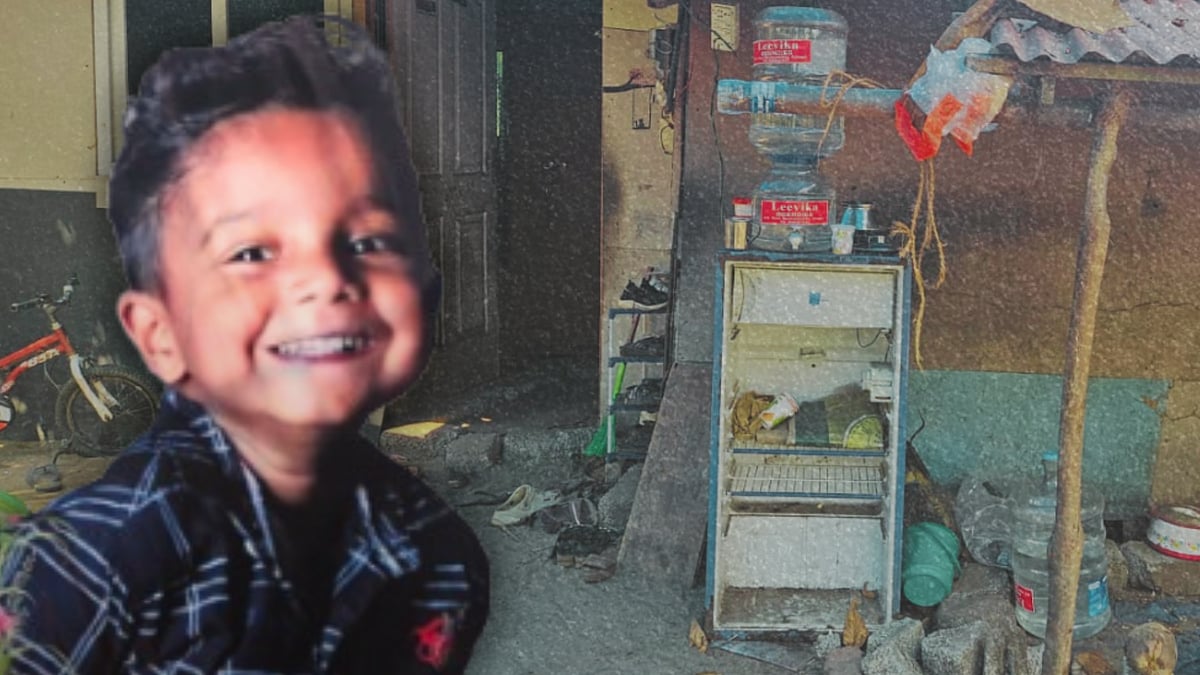
ON the lower half of a crumbling outer wall, a pencil-drawn king wearing a crown watches over. The artist was eight years old. His name was Dikshal, and he will never draw again.
The makeshift structure surrounded by trees he called home – asbestos sheets with tarpaulin for a roof, bamboo mats for bed, sand for floor – sits quietly on a lane bordering the Azhoor Bhagavathy Temple in Chirayinkeezhu, a coastal town on the outskirts of Thiruvananthapuram. Seven plastic chairs are arranged outside, as if waiting for someone. No one sits in them.
Death of the little boy by snake bite on April 23 has brought in the neighbours, residents of the area and media attention to the house. The photograph of a heartily smiling Dikshal is on a flex outside the lane.
His is the latest in a series of deaths by snake-bites in Kerala, believed to have risen after the unbearable summer heat. On April 18, an eight-year-old, Aljo, died after being bitten by a banded krait while asleep. His brother was also bitten.
The cobra that bit Dikshal was found later in the house, hiding beneath a sewing machine.
“We had heard of the recent bout of snake bites but thought that with the sheets covering our house, it would be hotter inside and keep the snakes away. We’d never seen a poisonous snake around here before, only the harmless rat snake,” Dileep, Dikshal’s father tells us.
Dileep tears away from a small crowd of people huddled around him, to attend to his four-year old daughter, Dikshitha, complaining about a missing paratha. The little girl is running around the small yard with a friend, not yet grasping the absence of her brother. Half a dozen yellow wreaths are placed over a part of the yard where Dikshal is buried. His mother Anu is somewhere inside, resting. A little white dog is in a cage.
Dikshal’s death has raised questions about the treatment at public hospitals as well as the reasons that drove the family to live in such unsafe conditions. When Dikshal woke up complaining of a wound, the family could not make out if the bite came from a snake.
“There was only one bite mark, not two (as commonly seen). We rushed him to the Chirayinkeezhu taluk hospital but they too could not make out if it was a snake bite and did not administer the anti-venom. They did some blood tests and asked us to take him to the Medical College Hospital in the city,” Dileep says.
Dikshal had been complaining about his pain, and talking to the family but on the way to the Medical College, he found it difficult to breathe and stopped responding. By the time he was brought to the hospital, he was declared dead. The taluk hospital has reportedly not administered anti-venom since the risk of doing that without a snake-bit, when it was still only suspected, could also be hazardous.
Questions on the hospital’s response also brought attention to the living conditions of the family. On the fateful night, Dileep and Anu had slept with Dikshita in one of the two little rooms of the house. A room away, Dikshal had slept on a mat with his grandmother Leela and his aunt Liji.
A day after his passing, the room is left alone, like a bad memory. Clothes are strewn across it and the sleeping mat remains spread out on the floor. A small table fan offers little respite from the summer heat. The walls, made of plywood, have gaps wide enough for large reptiles to crawl in. More holes remain uncovered on the ceiling, where the walls join the tin roof, which would let in sunlight and rain. Small blocks of cement have been placed to cover the cracks at the bottom, but these can hardly prevent further invasion.
Outside the house, cooking vessels are piled in a corner, dry clothes folded and hung over a rope. Space is clearly lacking in the temporary home the family hopes to leave behind once they have a real one.
The living conditions are far from desirable for this family of six, sharing the two dilapidated rooms. Dileep works as a daily wage labourer, in aluminum fabrication. Anu has been training for a computer job. Their house stands on five cents of land surrounded by marshes and woods, with no proper road connectivity, only a narrow path that is accessible on foot. Dileep’s grandfather had worked as a labourer for the landowner many years ago, and the family had lived there without any legal documents or ownership of land.
After his grandfather’s death, the landowner asked the family to move to a corner of the plot, promising to give them five cents of land in their name so they could build a house. The family relocated and constructed the temporary shed, where they have been living for the past 10 years. Building a house on his own was beyond Dileep’s means. He had been waiting for government assistance to make that possible.
However the family was not included in the state’s housing scheme, LIFE Mission - a project to build homes for the homeless, as they did not own land. It was only two years ago that they received a title deed in their name. After completing the paperwork, they had applied for financial assistance at the panchayat a year ago.
“We applied through the ward member and were informed that the aid had been approved. But after this incident, there were protests at the panchayat office. Following that, they sped up the process and told us it has now been moved to the block level,” Dileep says.
The panchayat officials we contacted say that the family’s application was under process and that they would have received the assistance soon.
Leena, Dileep’s sister, says, “Even if they had built a small house, they wouldn’t have received any aid from the panchayat, so they were waiting for support. For many years, there was no electricity connection here; it was only recently that they got one.”
Though Kerala declared itself free of extreme poverty in November 2025, cases like Dikshal’s point to gaps that persist on the ground. His death raises questions that go beyond one family, about housing access and timely support.