





















































Thrissur Pooram, fireworks and the cost of looking away
“Thrissur Pooram is a great cultural asset. But culture cannot be defended by ignoring preventable risks," said Dr R Venugopal, retired joint chief controller of explosives with Petroleum and Explosives Safety Organisation (PESO). The April 21 blast at Mundathikode, at a site where firecrackers were being assembled for the famed Thrissur Pooram, killed 15 people. The site, according to reports, had no proper license, no fire safety clearance, and no road wide enough for a fire engine to enter. For decades, Thrissur Pooram's status as a cultural tradition has made administrators, politicians, and courts reluctant to enforce the rules that exist on paper, diluting regulations and overlooking violations. In the process, an unofficial immunity was granted to an industry that operates almost entirely in the shadows. The subject of Thrissur Pooram is a sensitive one, said lawyer and environmental activist Harish Vasudevan, and the reason why regulations are ignored.Venugopal, a member of the inquiry commission that probed the 2016 Puttingal tragedy that killed over 100 people, said if we want Pooram fireworks to continue for future generations, we should prove that Kerala is capable of conducting it within the boundaries set up by the enforced rules and basic principles of risk management.Rather than shut the informal industry down, the solution, Venugopal said, would be to set up a regulated fireworks park where safety is the first concern.A culture that enabled violationsHarish alleges that ministers, political leaders, and administrative authorities enabled the violations that led to the Mundathikode fireworks tragedy. The crackers were made for the annual Thrissur Pooram sample firework display scheduled for Friday, April 23. Satheeshan, the person who ran the unit in Mundathikode was the contractor of the Thiruvambady temple, one of the organisers of the Pooram.Speaking to TNM, Harish said that the Thiruvambady Devaswom’s contract with the fireworks manufacturer itself is invalid, because one cannot give a contract for an illegal activity. “Indian law does not permit operating firecrackers on temple premises or anywhere between 10 pm and 6 am,” he said.According to a Supreme Court directive issued in 2005, sound-emitting fireworks are not allowed between 10 pm and 6 am.He also pointed to the potential presence of banned compounds in the crackers that were being assembled in Mundathikode. The Justice PS Gopinathan Commission that probed the 2016 Puttingal fireworks tragedy had recommended that the focus of firework displays be shifted from the sound to the light and colours. The blasts in the Mundathikode field were reportedly heard in a several kilometre radius. Dr Venugopal said that he is “99% certain that potassium chlorate was used at Mundathikode." He explained why the chemical is extremely hazardous: “Potassium chlorate is unstable when mixed with sulphur or other fuels. It can ignite from minor friction, heat, or impact, turning ordinary fireworks into a bomb-like device. It was prohibited in India in 1992 under the Explosives Rules, allowing only narrow exceptions for matches, toy caps, railway signals, and limited scientific research.” “Even if an LE-6 license is obtained for a firework display, there can be a contract for display only. The police should have taken samples and verified whether these compounds were present; only then should permission have been granted at the assembling site,” Harish added. The Explosives Rules 2008 provide for six types of licenses for handling fireworks: LE-1 for manufacturing fireworks or gunpowder or both; LE-2 for one time possession of gunpowder; LE-3 for possession and use of explosives for agricultural purposes and small quarry; LE-4 for transport of explosives in tractor compressor for use in well sinking; LE-5 for possession and sale fireworks from a shop, including temporary shop for 15 days; and LE-6 for possession and use of fireworks for public display.LE-1 and LE-2 limit the maximum quantity of explosives to 15 kg. LE-6, for public display, has a limit of 100 kg.Harish alleged that fireworks manufacturers often present ‘clean samples’ for testing, only to manufacture and use crackers containing banned chemicals for the actual festivities. “Last year, the LE-6 license was granted. [Banned compounds] are not found because the contractor provides ‘clean samples’ for testing. This is a fraud occurring with the knowledge of everyone involved,” he alleged.Harish highlighted the potential absence of approvals from the local self government and the fire and rescue departments. “Manufacturing fireworks requires a factory license, which is admittedly absent. If it existed, the police would have a copy, but the officer who was in charge says it is not there. Fire and Safety permission is also required. Permission will not be granted for a location where a fire engine cannot enter. While a Panchayat license can be applied for online, it requires all these documen
“THRISSUR Pooram is a great cultural asset. But culture cannot be defended by ignoring preventable risks," said Dr R Venugopal, retired joint chief controller of explosives with Petroleum and Explosives Safety Organisation (PESO).
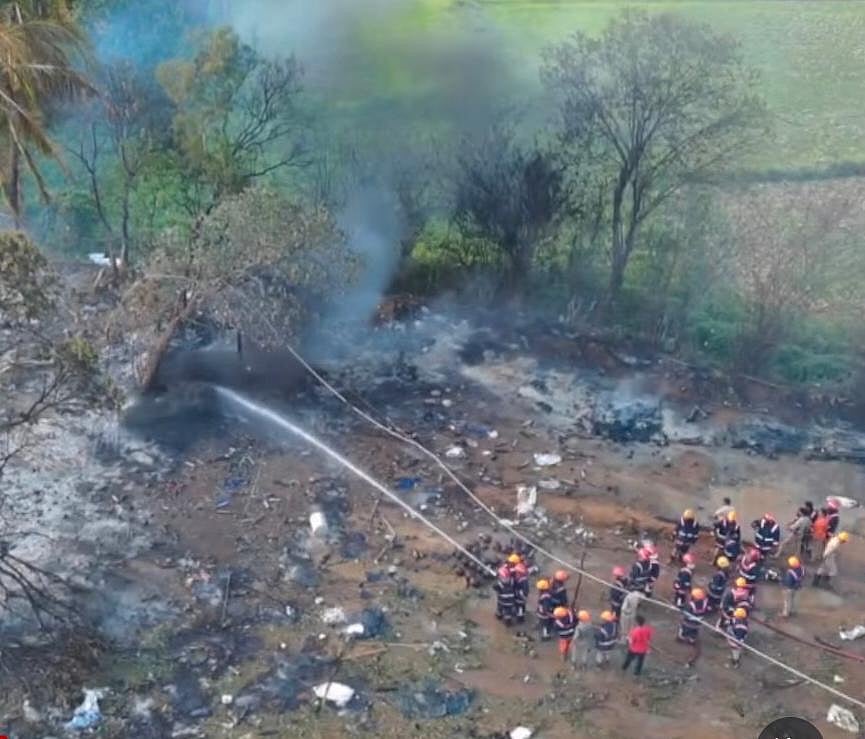
The April 21 blast at Mundathikode, at a site where firecrackers were being assembled for the famed Thrissur Pooram, killed 15 people. The site, according to reports, had no proper license, no fire safety clearance, and no road wide enough for a fire engine to enter.
For decades, Thrissur Pooram's status as a cultural tradition has made administrators, politicians, and courts reluctant to enforce the rules that exist on paper, diluting regulations and overlooking violations. In the process, an unofficial immunity was granted to an industry that operates almost entirely in the shadows.
The subject of Thrissur Pooram is a sensitive one, said lawyer and environmental activist Harish Vasudevan, and the reason why regulations are ignored.
Venugopal, a member of the inquiry commission that probed the 2016 Puttingal tragedy that killed over 100 people, said if we want Pooram fireworks to continue for future generations, we should prove that Kerala is capable of conducting it within the boundaries set up by the enforced rules and basic principles of risk management.
Rather than shut the informal industry down, the solution, Venugopal said, would be to set up a regulated fireworks park where safety is the first concern.
A culture that enabled violations
Harish alleges that ministers, political leaders, and administrative authorities enabled the violations that led to the Mundathikode fireworks tragedy. The crackers were made for the annual Thrissur Pooram sample firework display scheduled for Friday, April 23. Satheeshan, the person who ran the unit in Mundathikode was the contractor of the Thiruvambady temple, one of the organisers of the Pooram.
Speaking to TNM, Harish said that the Thiruvambady Devaswom’s contract with the fireworks manufacturer itself is invalid, because one cannot give a contract for an illegal activity. “Indian law does not permit operating firecrackers on temple premises or anywhere between 10 pm and 6 am,” he said.
According to a Supreme Court directive issued in 2005, sound-emitting fireworks are not allowed between 10 pm and 6 am.
He also pointed to the potential presence of banned compounds in the crackers that were being assembled in Mundathikode. The Justice PS Gopinathan Commission that probed the 2016 Puttingal fireworks tragedy had recommended that the focus of firework displays be shifted from the sound to the light and colours. The blasts in the Mundathikode field were reportedly heard in a several kilometre radius.
Dr Venugopal said that he is “99% certain that potassium chlorate was used at Mundathikode." He explained why the chemical is extremely hazardous: “Potassium chlorate is unstable when mixed with sulphur or other fuels. It can ignite from minor friction, heat, or impact, turning ordinary fireworks into a bomb-like device. It was prohibited in India in 1992 under the Explosives Rules, allowing only narrow exceptions for matches, toy caps, railway signals, and limited scientific research.”
“Even if an LE-6 license is obtained for a firework display, there can be a contract for display only. The police should have taken samples and verified whether these compounds were present; only then should permission have been granted at the assembling site,” Harish added.
The Explosives Rules 2008 provide for six types of licenses for handling fireworks: LE-1 for manufacturing fireworks or gunpowder or both; LE-2 for one time possession of gunpowder; LE-3 for possession and use of explosives for agricultural purposes and small quarry; LE-4 for transport of explosives in tractor compressor for use in well sinking; LE-5 for possession and sale fireworks from a shop, including temporary shop for 15 days; and LE-6 for possession and use of fireworks for public display.
LE-1 and LE-2 limit the maximum quantity of explosives to 15 kg. LE-6, for public display, has a limit of 100 kg.
Harish alleged that fireworks manufacturers often present ‘clean samples’ for testing, only to manufacture and use crackers containing banned chemicals for the actual festivities. “Last year, the LE-6 license was granted. [Banned compounds] are not found because the contractor provides ‘clean samples’ for testing. This is a fraud occurring with the knowledge of everyone involved,” he alleged.
Harish highlighted the potential absence of approvals from the local self government and the fire and rescue departments. “Manufacturing fireworks requires a factory license, which is admittedly absent. If it existed, the police would have a copy, but the officer who was in charge says it is not there. Fire and Safety permission is also required. Permission will not be granted for a location where a fire engine cannot enter. While a Panchayat license can be applied for online, it requires all these documents. Therefore, it is unlikely any of these permissions were taken,” he said.
Fire and rescue teams took over an hour to reach the blast site on April 21, as the field was not accessible for fire engines.
“Labeling Thrissur Pooram as 'sensitive' because it is a religious practice is a mixing of facts and arguments. This is a fallacy,” he said, adding, “We are not discussing faith. Is this a licensed activity? No. Is the contract for a permissible activity? No. Are statutory authorities providing sufficient safeguards for procurement and storage? No.”
Fireworks park proposed
According to Venugopal, such tragedies can be prevented in the future by setting up a dedicated fireworks park in the state.
“I have suggested to the government of Kerala that a fireworks park be set up over 60–70 acres with three or four factories. In such a situation, we can provide safe distances for mixing, manufacturing, drying, and packing. We can maintain a common fire fighting system inside the entire park and provide fire stations with fire engines,” he said.
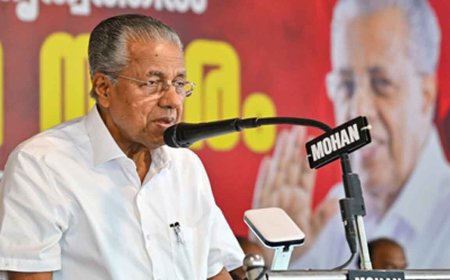
Harish also highlighted the issue in ordering a judicial probe instead of a departmental inquiry into the Mundathikode tragedy. On Wednesday, April 22, a Cabinet meeting led by Chief Minister Pinarayi Vijayan entrusted retired Justice CN Ramachandran Nair to conduct a judicial probe into the tragedy.
Harish said, “In any other situation, a departmental inquiry would be declared immediately to identify faults. When ordering such an inquiry, those in decision-making positions must be suspended or removed first. In this case, that would be the District Collector and the ADM, as well as the police. Under administrative law, the government cannot proceed without an investigation that suspends the Thrissur DCP and the Collector. A judicial inquiry is often ordered specifically to avoid suspending or removing these officials. Furthermore, a judicial commission takes about three years to complete a comprehensive investigation. There is a valid reason to argue against a judicial inquiry.”