



























































Nepal shifts focus to rebuilding lives and restoring homes after devastating flash floods
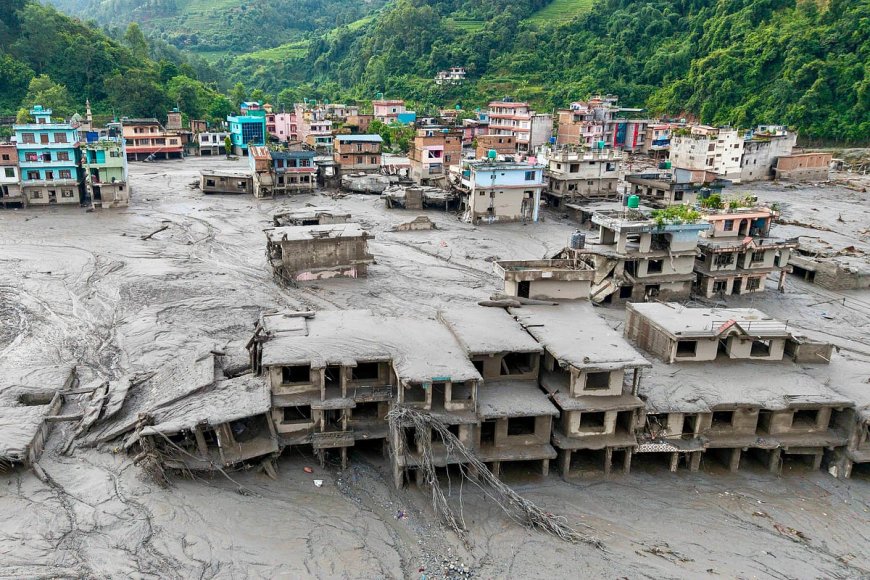
NEPAL has begun looking beyond the immediate rescue and relief phase of the devastating flash floods that swept through parts of the country on August 26, with the focus increasingly turning to rebuilding homes, restoring infrastructure and helping displaced families rebuild their lives.
The disaster, triggered by a massive surge of water, ice, rock and debris along the Bhote Koshi–Trishuli river system, caused widespread destruction across Rasuwa, Nuwakot, Dhading and other areas.
Houses, roads, bridges, schools, health facilities and hydropower infrastructure were badly damaged or swept away.
Nepal's National Disaster Risk Reduction and Management Authority has estimated preliminary losses at NPR 387.54 billion (about $2.6 billion). The government estimates that around 7,500 houses have been destroyed, while nearly 20,000 homes may need to be rebuilt.
Thousands remain displaced
The human cost remains enormous. More than 1,200 people have died, while thousands are still reported missing. Rescue teams continue searching affected areas as well as hydropower tunnels where workers may still be trapped.
A rare ray of hope came on Friday when two workers were rescued alive after spending nine days inside the Upper Trishuli 3A hydropower tunnel. Their rescue has encouraged teams to continue searching other tunnels for possible survivors.
In the worst-affected communities, however, the challenge is now much broader than rescue. Thousands of families have lost their homes, belongings and livelihoods and are dependent on temporary shelters and relief supplies.
In Bidur municipality, one of the worst-hit areas, the mayor said 10 of the municipality's 13 wards were affected, with more than 3,000 people staying in about 17 holding centres. Rescue and relief operations are continuing alongside preparations for reconstruction.
Roads and essential services a priority
Restoring basic infrastructure is expected to be one of Nepal's biggest challenges. Roads and bridges have been destroyed or damaged, while electricity, telecommunications and water supplies have been disrupted in several areas.
The government estimates that approximately NPR 7.95 billion ($53 million) will be required during the first four months for early recovery and rehabilitation, including temporary shelters, roads, drinking water and power restoration. A more comprehensive assessment of reconstruction requirements is still underway.
International assistance is also beginning to support the recovery. Nepal has acknowledged assistance and solidarity from countries including India, China, the United States, the United Kingdom, Japan and several other nations, as well as international organisations.
UNICEF said a flight carrying 84 metric tonnes of humanitarian supplies arrived in Kathmandu on Friday for children and families affected by the floods. The supplies include assistance for families who have lost homes and access to safe water and sanitation.
A long road ahead
For Nepal, the immediate task is to save those who can still be saved and provide relief to survivors. But the longer-term challenge will be rebuilding communities in a way that makes them safer from future floods and landslides.
The scale of the destruction means reconstruction will require substantial financial resources, careful planning and sustained international support. Authorities are expected to assess damaged settlements and infrastructure before deciding where homes and public facilities should be rebuilt.
For thousands of Nepalis who have lost everything, recovery will not simply mean replacing buildings and roads. It will mean restoring livelihoods, communities and a sense of security after one of the country's most devastating natural disasters in recent years.